Summary
A concise overview of key roles, expertise and focus areas. For decision-makers who want a quick, clear picture.
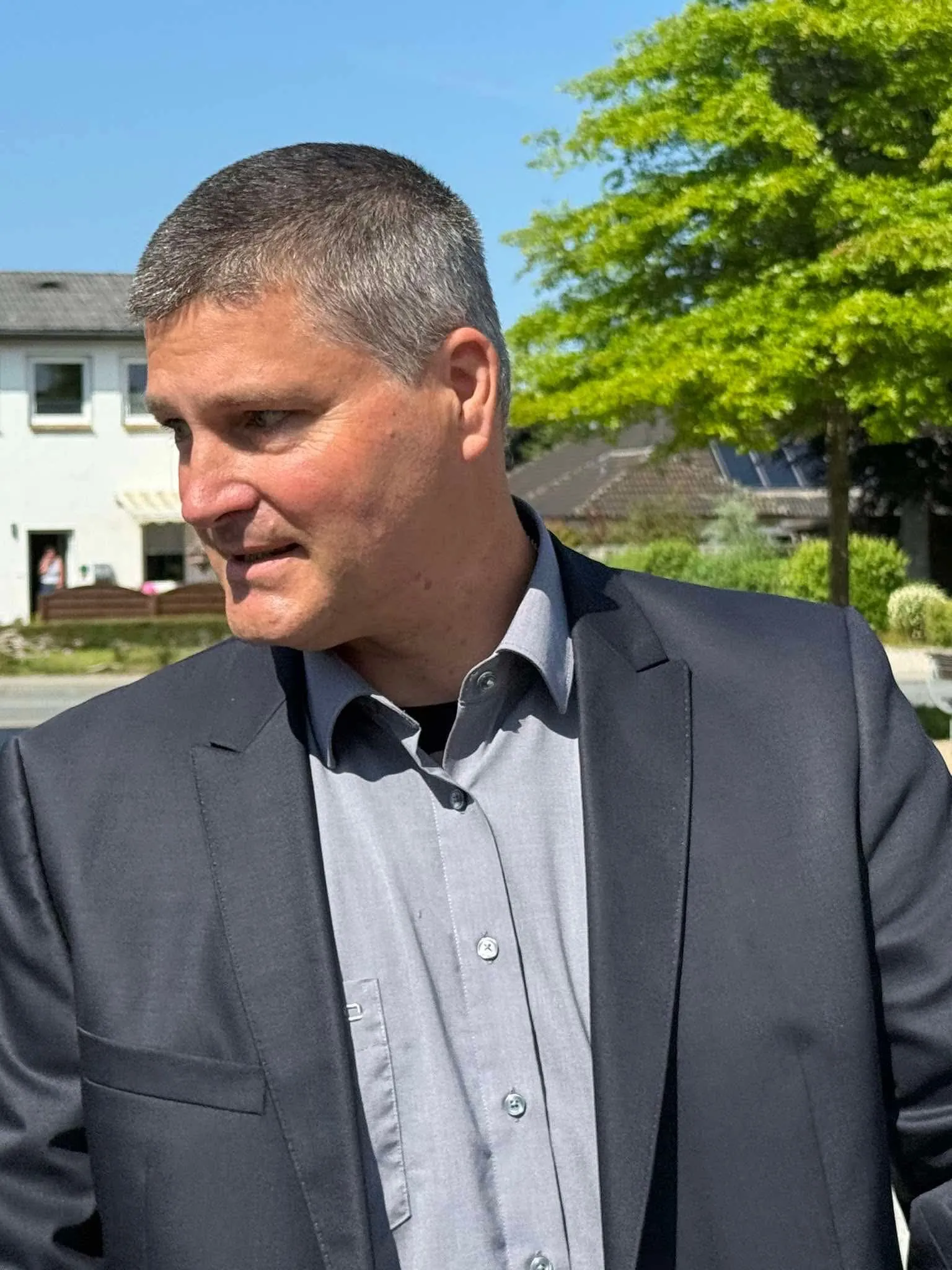
Oliver Groht works with management teams and owners to steer their companies on reliable figures and clear processes. He co-founded a company, led it for more than two decades and sold it — and he knows the systems in which the answers are buried. He combines entrepreneurial experience with technical delivery, from the metric through to the data model.
As the founder and sole shareholder of the Arkcanis Group, he holds stakes in technology and aviation-related companies. Adviser to some, co-shareholder in others: he does not recommend anything he would not answer for himself.
Engineering degree in technical computer science, entrepreneur since 1999.
1999 — Founded as an IT systems house. While still studying for his diploma in Technical Computer Science at the University of Applied Sciences in Hamburg, Oliver Groht was already running his own computer and electrical engineering business. A project at the microelectronics application centre in Hamburg's Harburg docklands brought him together with the two partners with whom he founded catworkx GmbH — with no spin-off programme and no public funding. The name carried the idea: the W stood for Windows, the X for Unix and Linux. Rather than commit to one world, the better solution was meant to decide.
2001 — The setback. For Stratex Logistics AG the young company developed internet-based emergency logistics for the automotive industry — convincingly enough that Stratex acquired catworkx to secure the expertise. A stock market listing was the goal, Oliver Groht was appointed CTO on its executive board, and the contracts were signed. The attacks of 11 September ended all of it: the business collapsed abruptly and Stratex filed for insolvency within months. catworkx extracted itself with a loss in the high six figures and came through the years that followed without investors.
2002 — Atlassian, as a user first. Looking for more transparency inside its own operation, catworkx became a customer of a two-person company in Australia, and there was direct contact with its founders. The first German translation of Jira came out of the company, and the German term that still stands in Jira for a work item was coined in the process. catworkx only became an official Atlassian partner five years later, in 2007. Use it yourself first, then offer it — that order has stayed.
2008 — Tools beyond their purpose. Jira was put to work for a car park operator to track physical alarms, years before a dedicated product for that existed.
2012 — The focus. After his first Atlassian Partner Summit in the United States, Oliver Groht repositioned the company: the infrastructure and web business was folded into Atlassian services, and from 2014 the focus rested exclusively on that ecosystem. By the end of 2019 catworkx was one of the leading Atlassian partners in the German-speaking region. A single Hamburg company had become a group with subsidiaries in Germany, Austria and Switzerland, from 2017 under his management in the holding company and from late 2020 as CEO responsible for its strategic direction.
2022 — Sale and a fresh start. Following the transaction of the catworkx Group to the Timetoact Group from Cologne, Oliver Groht focuses on his own holdings in the technology and aviation sectors, at times extending to aircraft-owning companies. He knows aviation from an owner's perspective. Alongside that he advises entrepreneurs who want to design or optimize their business processes.
Two public sources document this career: the founding years in the 2016 Business People Magazin article Vom Gründer zum weltweit operierenden IT-Dienstleister (in German), and the sale in TIMETOACT GROUP's press release of 26 April 2022.
Oliver Groht on how Arkcanis is set up:
A group that grows for eight consecutive years eventually becomes hard to see through. To keep catworkx steerable I mapped around eighty per cent of our processes in Jira and built an analysis system of my own. It brought together work items, time tracking and accounting, and carried the resulting metrics forward so they were current every morning. No more reports compiled by hand.
That changed more than expected. Because our processes were both described and measured, the quality management system could be certified to ISO 9001 in a little over three months. Reports to our vendor ran automatically. And when the group was sold, the real value showed: anyone who can evidence their numbers at any time negotiates faster and from a different position.
Later I sat on the other side of the table as an investor and kept seeing the same pattern — the numbers exist, but nobody trusts them. So I built the same thing again, for a different industry: in one flight operation the system made the true cost of a single flight visible. That gave the shareholders a sound basis for their decision — including where the result contradicted what had been assumed.
For my engagements I agree clear roles and put in writing who answers for what.
That is precisely why Arkcanis is a boutique. No reselling of third-party licences, no growth through headcount, but tools that take on the recurring work — and advice that does not stop at the recommendation but follows it through to the data model.
These four words sit in the Arkcanis logo, and they are not decoration. They name the Deming cycle, the model of continuous improvement Oliver Groht uses as a leadership and working principle — in his own group as much as in client work.
The hard part is the second half. Planning and doing are within reach of any company. What is usually missing is the check: the measurement that shows whether what was planned actually happened, early enough to still act on it. A reporting system that carries metrics forward every morning is nothing other than a check that does not wait for the monthly close. And act means a deviation turns into a decision rather than a slide.
That is why the work here does not end with a recommendation. Plan and do alone take the cycle half way round; only measurement and consequence close it. At catworkx, having the process landscape both described and measured also carried the ISO 9001 certification — a standard built around the same cycle.
How the cycle is applied in client work is described under C-level and executive advisory; the article The Deming Cycle covers it in full.
Two versions: a concise summary and a comprehensive executive CV covering the full career.
A concise overview of key roles, expertise and focus areas. For decision-makers who want a quick, clear picture.
Career, leadership experience, projects and entrepreneurial achievements in detail — for a complete assessment.
Tell us briefly what it is about – we will get back to you.