
Consulting

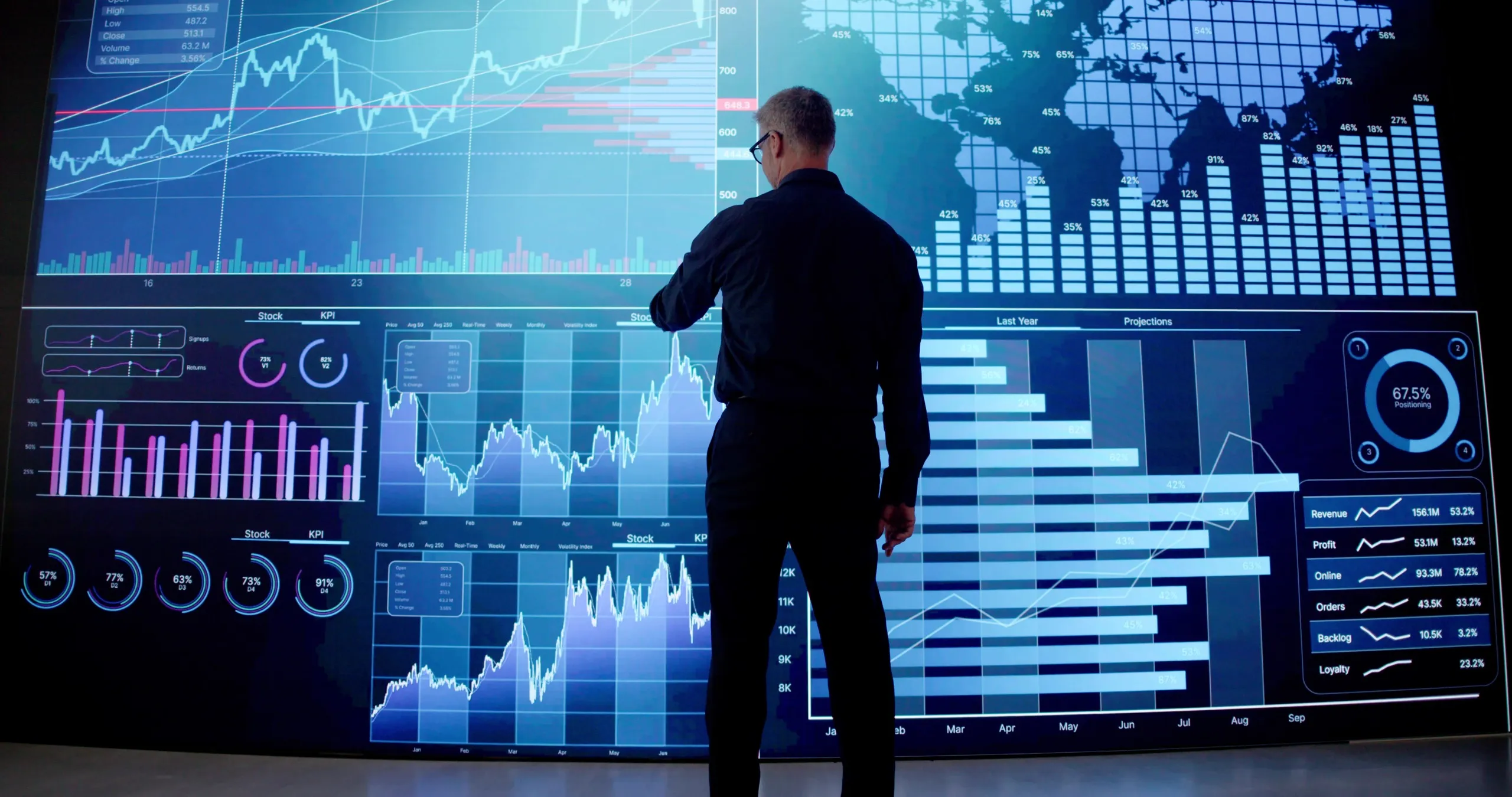
Grafana Dashboards - Data made visible. Decisions accelerated.

We transform data from your enterprise systems into clear, actionable dashboards – precise and optimized for every role.

Discuss the scope

A stone block feeding three light channels into three glass plates of different shapes

Why Grafana dashboards matter

Every company has figures. They only become decision-ready when each role gets exactly the view it needs — and when it is traceable where every figure came from.

We have been building dashboards since 2020, first for the controlling of a group operating in three countries, then in two flight operations on live data. The largest of those dashboards carries 84 panels, the owner report per aircraft 39.

What we build

Data Modeling & KPI Definition

We develop a clean, consistent data model as the foundation for precise visualizations. KPIs are defined, calculated, and versioned with technical clarity—so every figure remains reliable and fully traceable.

Highlights:

  • KPI definitions for Flight Ops, Sales, Finance
  • Unified metrics & calculation logic
  • Normalized data structures for Grafana
  • Consistent time & dimensional models

Dashboard design for teams & management

Dashboards that translate complex data into clear, intuitive visual insights. Each role gets exactly the views required for operational execution or strategic decision-making — from real-time flight operations to C-level performance KPIs.

Highlights:

  • Role-based dashboards across all organizational levels
  • Layouts optimized for rapid comprehension
  • Deep-dive analytics and comparative views
  • High-performance, responsive panels

Integration of all relevant data sources

Grafana is seamlessly integrated with Leon, Jira, and internal systems. Robust ETL pipelines and consistent identifiers ensure stable, reliable visualizations that are refreshed at the agreed interval.

Highlights:

  • Integration of Leon, Jira, finance systems, and internal APIs
  • Consistent keys and data mappings
  • Fault-tolerant ETL processes
  • Incremental updates and delta handling

Permissions, versioning, monitoring

We set the environment up so it keeps running without us: permissions in place, dashboards under version control, alert rules defined. You remain the operator — running the instance day to day is not part of this.

What gets set up:

  • A role and permission model per dashboard
  • Dashboards under version control, every change traceable
  • Alert rules as source code, not clicked together by hand
  • Monitoring of the metrics and of the data pipelines

What each role gets out of it

The roles below illustrate the benefit using a flight operation as the example. In other industries, operations, sales and management take the same positions.

Flight Ops

  • Live transparency on workload, delays & performance
  • Early detection of deviations in operational processes
  • Optimized decision-making through up-to-date KPIs
  • Reduced manual data search in Leon & internal tools

Sales & Charter

  • Clear overview of sales pipelines, inquiries & conversion rates
  • Improved proposal quality through a sound data foundation
  • Identification of demand trends & seasonal patterns
  • Faster response times thanks to updated pipeline visualizations

Management

  • A single dashboard for financial, operational & strategic KPIs
  • Reliable decision-making foundations through consistent data models
  • Early warning indicators for cost development, performance & risks
  • Metrics whose derivation can be followed across all systems

Working together and scope of services

We start by clarifying which questions the dashboards need to answer, which data sources are available for them and how often those sources can be refreshed. The interval follows from the sources, not from the dashboard.

We recommend a first, clearly bounded scope: one role, a handful of metrics, one dashboard. That makes it possible to confirm the metrics measure the right thing before the scope grows.

You receive the configured Grafana environment with a role and permission model, the dashboards under version control, and documentation of each metric: what it measures, where the data comes from and when it is refreshed. You run it from there; further development and support can be agreed separately. Procuring or cleaning up data sources is not part of it — what is wrong in the source will not become right in the dashboard.

If the prepared data does not exist yet, building the pipelines is part of the work — see data pipelines and ETL. For a flight operation the data chain is available as a finished building block: Leon2DB brings flights, invoices and fleet into a database you can query.

Let's talk about your project.

Tell us briefly what it is about – we will get back to you.